
Why No-Extinction?
Global problems require global responses
Climate change, biodiversity loss, nuclear risk, inequality, resource scarcity and the development of artificial intelligence cross borders and generations. Yet we keep addressing them mainly through institutions, interests and decisions organized at the national level and in the short term.
This is the question No-Extinction was created to address.
The problem isn't only knowing what to do. It's managing to do it together, at the scale and within the timeframe required.
The starting point
We already know a lot. And many solutions already exist.
We have scientific knowledge, technologies, economic resources and tools that could reduce many of the risks we face.
This doesn't mean every problem has a simple or certain solution. It means that, in many cases, the main obstacle is no longer just understanding what could be done, but managing to decide how, when and with whom to do it.
Where we stand
Knowledge
Disponibile: Available and constantly updated.
Solutions
Disponibile: Many already exist, others are in development.
Global coordination
Da costruire: Still largely to be built.
Why it's difficult
A problem of scale and time
National institutions are indispensable, but they were built mainly to govern national societies and territories. Many of the problems of the 21st century, instead, cross borders and produce consequences that can appear decades after a decision is made.
Borders
Global problems don't stop at national frontiers.
Time
Political and economic cycles are often much shorter than the phenomena we need to govern.
Interests
A decision that is useful globally can have immediate costs for individual countries, sectors or social groups.
Coordination
Even when many governments share an objective, agreeing on timing, costs and responsibilities can be extremely difficult.
International cooperation
International cooperation exists. But is it enough?
International institutions have made possible results that no country could have achieved alone, and they remain indispensable.
But many of their tools depend on the consensus and willingness of states. When national interests and the global interest conflict, making decisions that are fast, binding and enforceable can become very difficult.
No-Extinction does not propose abolishing states or replacing every existing institution. It proposes discussing whether, for a limited number of truly global problems, more effective tools for cooperation and decision-making are needed.
Where it comes from
This is why No-Extinction exists
No-Extinction was born from a question: how can we address problems that concern all of humanity when our decision-making capacity remains largely fragmented?
It does not claim to have all the answers. It wants to help connect knowledge, solutions and participation, and to foster an international conversation about the need for more effective tools to address global problems.
Understand
The problems and how they connect.
Decide
Which solutions are effective, fair and realistic.
Act
Together, at the scale required.
A different perspective
Not a single problem. The system as a whole.
Climate, biodiversity, resources, inequality, conflict, nuclear risk and technological development are often addressed separately. No-Extinction starts instead from a different perspective: these problems belong to the same system and can influence one another.
Parts of the same system
- Climate
- Resources
- Economy
- Society
- Peace
- Technology
Addressing one problem while ignoring its effects on others can solve one and worsen another.
Solutions too
Solutions are also part of the same system
- An energy policy affects climate, the economy, jobs and security.
- A transformation of agriculture can affect emissions, biodiversity, health, prices and employment.
- A policy on artificial intelligence can affect productivity, employment, the distribution of wealth, security and scientific capacity.
It's not enough to ask whether a solution works. We must ask what consequences it produces across the entire system.
Fairness
Solutions must also be fair
A measure can be effective from an environmental or technological standpoint and at the same time produce very different costs for people, places and professional groups.
A transition that asks some to bear most of the costs risks being unjust and losing public support.
Those who risk losing their job, income or opportunities because of a necessary transformation must not be left alone.
The conditions for a workable transition
Effective solution
Sustainable costs
Financing
Social protection
A workable transition
Independence
An independent project
No-Extinction was not created to support a party, a government, an ideology or an economic interest.
Proposals must be judged on their consequences, based on the best available knowledge and compared against possible alternatives.
An idea doesn't become right just because it's ours. It must be open to discussion, verification and, if necessary, change.
Checks and balances
Power must have limits. Including the power we propose.
If we ask, for truly global problems, for shared tools capable of making binding decisions, we must strictly limit these powers to the matters defined by their mandate.
Strong safeguards are needed: competence, integrity and independence; transparency and accountability; independent oversight; the possibility to challenge decisions; limited personal terms; periodic review — including of the institution's own competences and powers — to prevent them from automatically expanding into other areas.
The greater the power, the greater the checks must be.
Where it comes from
From a concern to a project
No-Extinction was born from a growing awareness that many of the great challenges of our time cannot be effectively tackled one at a time.
Looking at climate change, ecosystem degradation, nuclear risk, inequality, competition for resources and the rapid development of new technologies, a common question emerges: do we have adequate tools to address problems that concern all of humanity?
This question led to a personal effort of study and outreach.
Over time, the idea grew into something more ambitious: building an international space dedicated not only to understanding these problems, but to their connections, their solutions and the conditions needed to make them work.
Who started No-Extinction
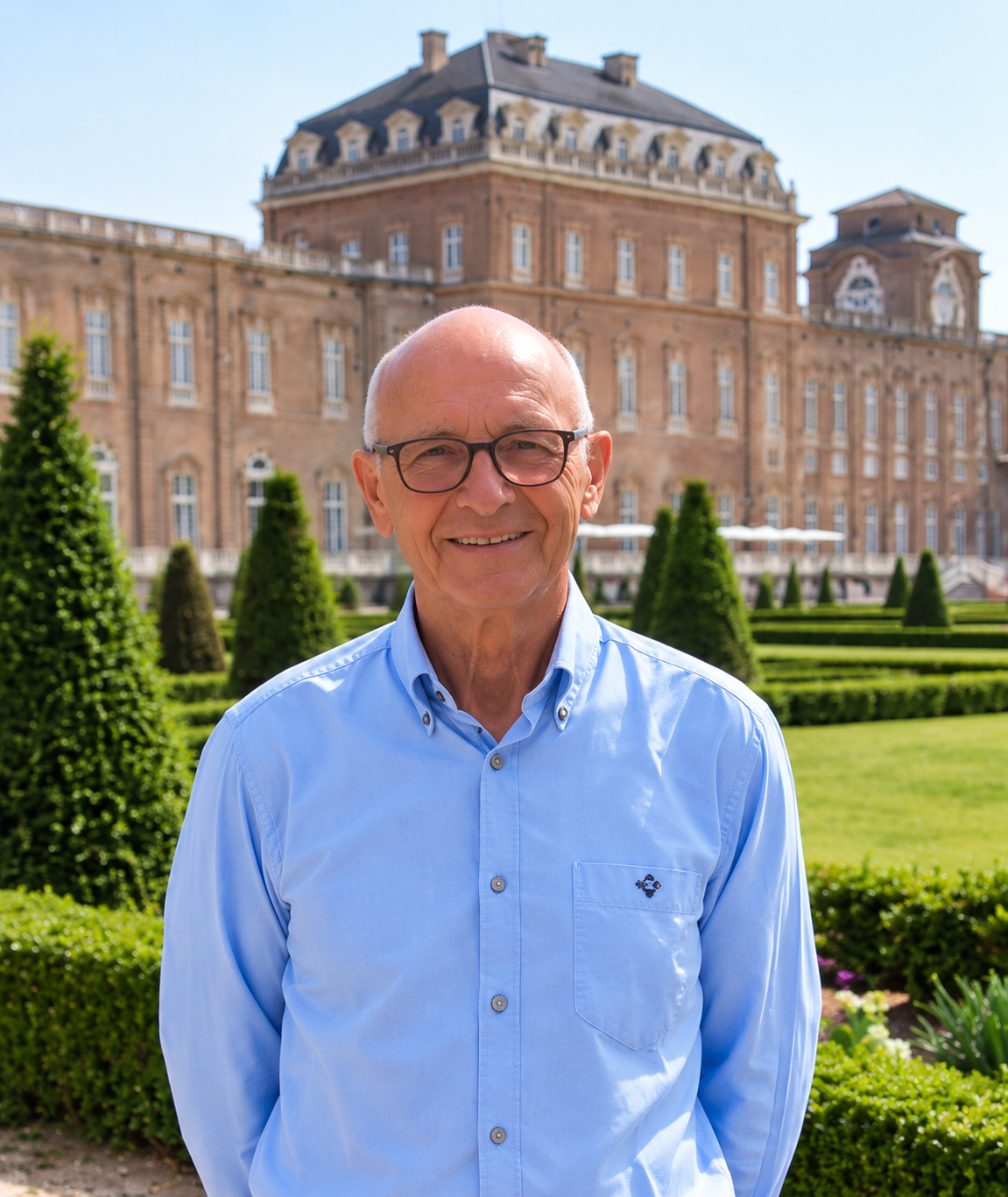
My name is Pietro Mugnaini. I am 75 years old, and I am neither a scientist nor a politician. In my professional life, I worked as an export manager, travelling and engaging with different countries and cultures.
Since 2019, including through my participation in climate demonstrations, I have devoted more and more of my time to the major risks that could shape humanity's future. I have written two books on these issues and volunteer with Italy's Civil Protection service.
But above all, I am a grandfather. Thinking about the world in which my grandchildren will live led me to a question that I consider fundamental:
How can a species intelligent enough to understand the risks threatening its own future fail to be rational and far-sighted enough to organize itself to prevent them?
No-Extinction grew out of this question.
I did not create this project because I believe I have definitive solutions. Instead, I have tried to bring together information, proposals and tools that can help citizens and organizations understand the problems, discuss them and take action.
No-Extinction began as one person's initiative, but it can only have meaning if it ceases to be one: if it becomes a space open to contributions from citizens, scientists, associations, teachers, young people and anyone who believes that global problems require greater cooperation and foresight.
An idea with deep roots: Aurelio Peccei
No-Extinction does not claim to be the first to recognize the contradiction between global problems and institutions that remain predominantly national.
As early as the late 1960s, Aurelio Peccei, who co-founded the Club of Rome with Alexander King, understood that humanity was becoming an increasingly interdependent system while its political institutions remained ill-equipped to address problems on a planetary scale.
Peccei urged us to view humanity's great challenges not in isolation, but as parts of an interconnected system, adopting a global and, above all, long-term perspective.
That thinking also inspired the work of the Club of Rome which, in 1972, led to the publication of The Limits to Growth, one of the first major attempts to use systems models to study the long-term consequences of population growth, industrialization, resource use and pollution.
Almost sixty years later, that question remains dramatically relevant. In the meantime, some risks have intensified and others have taken on new dimensions, from the nuclear threat to emerging technologies.
If we understood the problem then, why have we still not managed to organize ourselves to address it?
No-Extinction also seeks to build on this legacy, adding a possibility that scarcely existed in Peccei's time: a worldwide network capable of directly connecting citizens and organizations across national borders, in an effort to turn awareness into democratic pressure and democratic pressure into political action.
FROM GLOBAL RISKS TO GLOBAL ACTION.
No-Extinction began as the initiative of one person. But a project about global cooperation would be contradictory if it insisted on remaining the project of a single person.
It can start with one. It must become the work of many.
That's why No-Extinction wants to progressively open up to researchers, technicians, teachers, students, associations, professionals and citizens willing to contribute knowledge, critique, proposals or simply their participation.
Tools
A human project, also built with new tools
No-Extinction also uses artificial intelligence tools to organize information, explore alternatives, develop content and support the realization of the project.
Artificial intelligence can enormously expand what a person or a small group can accomplish. But it does not replace fact-checking, critical debate, or responsibility for decisions.
Technology can help us understand and build. The responsibility to choose remains human.
What it wants to become
Not just a website
No-Extinction wants to progressively become a place where knowledge, proposals and participation can meet.
A source of knowledge
Information that is understandable, verifiable and up to date.
A laboratory of solutions
Proposals to discuss, compare and improve.
An international community
People who don't necessarily share every idea, but who share the belief that global problems require greater cooperation.
The goal
Reduce the risks. Improve the future.
The goal of No-Extinction is not to predict exactly what the future holds. It is to help reduce the risks that could seriously compromise humanity's future and, at the same time, to promote more sustainable, peaceful and fair living conditions.
We don't know if we will manage to change the world. We know it's worth trying to change its direction.
An open project
You don't need to agree on everything
No-Extinction does not ask you to sign up to a fixed set of ideas. It asks you to share a starting point: the great global problems deserve to be addressed together, with knowledge, responsibility and a perspective that goes beyond immediate interests and national borders.
The proposals put forward in this project can be discussed, criticized and improved. It is precisely through the exchange of different skills, experiences and viewpoints that they can become stronger.
How can I contribute
Ways to contribute
Understand
Get informed and go deeper.
Share
Spread awareness of the problems, solutions and the project.
Contribute
Bring expertise, data, ideas, critique and proposals.
Participate
Help build an international community.
You don't need to be a scientist, an expert or an activist to contribute. But when a proposal requires specialized expertise, that expertise must be sought out and heard.
Understand. Decide. Act.
Understanding the problems is necessary. Identifying solutions is possible. But no meaningful change happens without people willing to turn knowledge and decisions into action.
No-Extinction is a project under construction. The next step also depends on who decides to get involved.