
From challenges to choices
The solutions exist
Many of the tools needed to address the great global problems already exist. Technologies, knowledge and strategies can reduce risks and improve living conditions. The difficulty is not only knowing what to do, but succeeding in choosing, coordinating and applying solutions at the scale and within the timeframe required.
- Understand
- Decide
- Act
One single system
Connected problems require coordinated solutions
There is no single solution capable of addressing all the great challenges of our time. Energy, environment, food, resources, economy, technology and cooperation are parts of the same system. Acting in one area can also produce effects in the others. That is why it is not enough to look for the best solution to a single problem: we need to understand which combinations of interventions can produce the greatest overall benefits.
- Energy, climate and mobility
- Nature and resources
- Food
- Economy, consumption and society
- Technology and security
- Global cooperation
Where we can act
Six areas, many solutions
Each area brings together four solutions. Open an area to read its content: the qualitative indicators show impact, timing and scale, not scores.
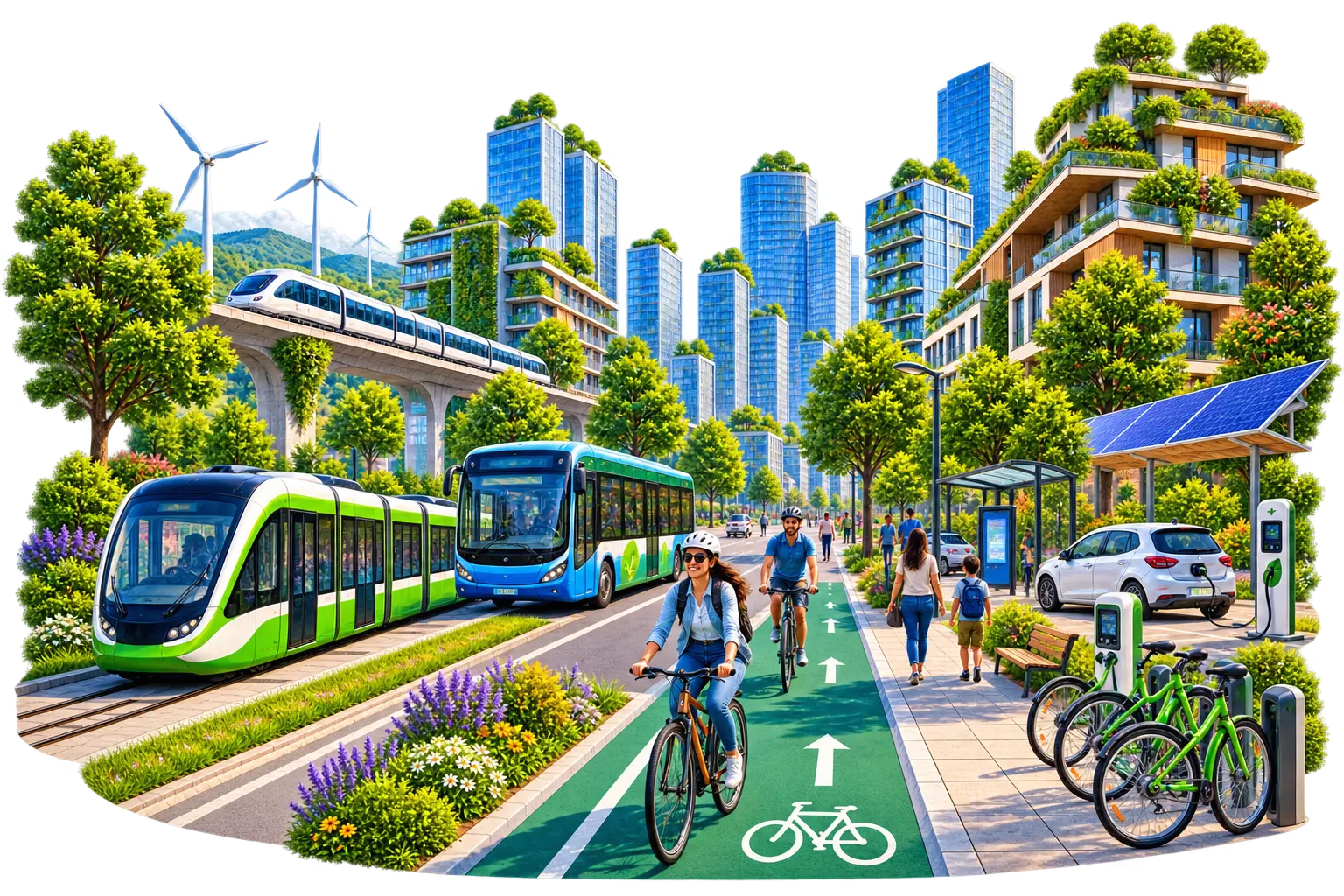
Energy, climate and mobility
Transforming how we produce and use energy, and how we move around, is essential to reducing emissions and building more efficient, resilient systems.
- Producing energy without fossil fuels
- Consuming less energy and using it better
- Changing how we move
- Putting a price on pollution without penalising the weakest
- 01
Producing energy without fossil fuels
Accelerating the development of low-emission energy sources, electricity grids and storage systems can progressively reduce dependence on coal, oil and gas. The transformation must be accompanied by adequate grids, storage capacity, territorial planning and attention to environmental impacts.
- Impact multiple
- Time medium-long
- Scale national → global
Includes
- renewable energy
- grids
- storage
- progressive reduction of fossil fuels
- distributed generation and energy communities
- 02
Consuming less energy and using it better
The most sustainable energy is also the energy we manage not to waste. More efficient buildings, better industrial processes, electrification and the modernization of plants can reduce consumption and emissions while maintaining or improving services.
- Impact multiple
- Time short-medium
- Scale local → national
Includes
- building efficiency
- industrial efficiency
- electrification
- waste reduction
- repowering and revamping of existing plants
- 03
Changing how we move
Public transport can become a real alternative to the private car only if it is frequent, reliable, widespread and affordable. Free or heavily subsidised fares, where sustainable, can encourage its use, especially when combined with better service.
- Impact multiple
- Time short-medium
- Scale local → national
Includes
- free or heavily subsidised public transport
- greater frequency and coverage
- railways
- cycling and pedestrian mobility
- park-and-ride facilities
- electrification of transport where appropriate
- reduced need for motorised trips through better urban planning
Multiple benefits
- Fewer emissions
- Less traffic
- Cleaner air
- Less noise
- Greater social accessibility
- 04
Putting a price on pollution without penalising the weakest
Attaching a cost to emissions and the most polluting activities can steer investments and behavior towards less harmful alternatives. But environmental taxation is sustainable only if part of the revenue is used to compensate the most exposed households, help workers through the transition and fund accessible alternatives.
- Impact indirect but broad
- Time short-medium
- Scale national → global
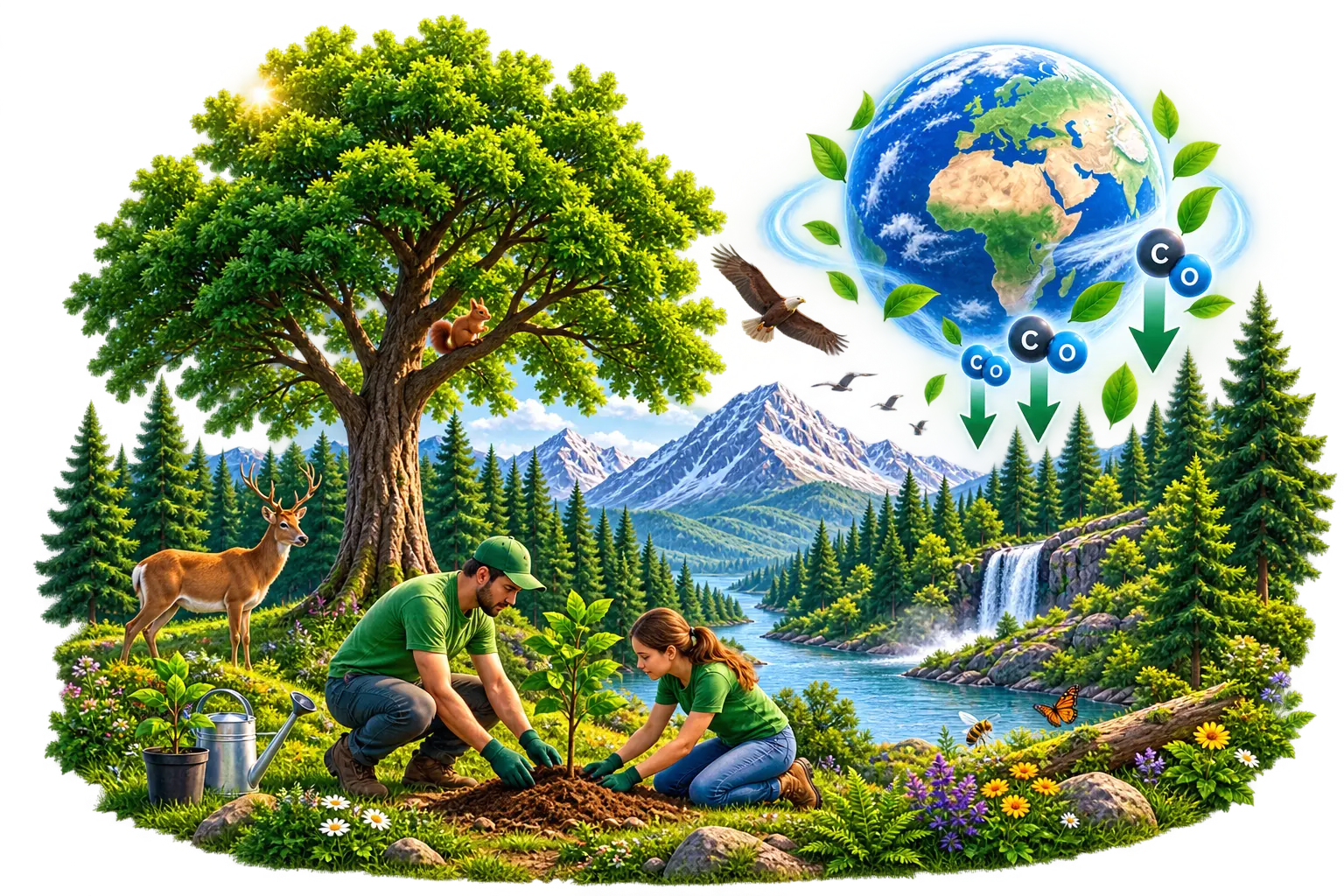
Nature and resources
Protecting ecosystems and using resources within their capacity to regenerate means defending the natural foundations on which societies and economies depend.
- Protecting and rebuilding ecosystems
- Reforesting, but the right way
- Protecting water and soil
- Using resources more than once
- 01
Protecting and rebuilding ecosystems
Forests, wetlands, seas, rivers and other ecosystems perform essential functions: they absorb carbon, regulate the water cycle, protect the soil and host biodiversity. Stopping the destruction of still-intact ecosystems must go hand in hand with restoring degraded ones.
- Impact multiple
- Time immediate → long
- Scale local → global
Includes
- protection of primary forests
- well-managed protected areas
- wetland restoration
- recovery of degraded habitats
- protection of marine environments
- curbing indiscriminate land consumption
Preventing destruction
Protecting ecosystems also includes preventing fires through land management, monitoring, maintenance and rapid-response capacity.
Protecting what already exists is often more effective than having to rebuild it later.
- 02
Reforesting, but the right way
Planting trees can help absorb CO₂, reduce erosion, improve the water cycle and rebuild habitats. But simply increasing the number of trees is not enough: resilient ecosystems must be created, using species suited to each territory and favoring biodiversity. A new forest does not immediately replace the ecological value of an ancient one.
- Impact multiple
- Time long
- Scale local → regional
Also includes
- urban greenery
- green corridors
- continuity of vegetation in cities
Adaptation and urban greenery do not replace emission reductions: they complement them.
- 03
Protecting water and soil
Fresh water and fertile soil are renewable resources only within certain limits. Pollution, overuse, erosion and climate change can compromise their availability and quality. Reducing waste, improving irrigation, recovering and reusing water, protecting aquifers and countering soil degradation increases the resilience of societies and ecosystems.
- Impact multiple
- Time short-medium
- Scale local → regional
Includes
- efficient irrigation
- water reuse
- rainwater harvesting
- aquifer protection
- urban de-sealing
- more natural management of watercourses
- reducing losses in water networks
- 04
Using resources more than once
The extract → produce → use → discard model continuously consumes new raw materials and generates large amounts of waste. More durable, repairable and reusable products, together with the recovery and recycling of materials, can reduce pressure on natural resources.
The energy transition will require large quantities of certain materials. Extending the lifespan of products, recovering raw materials and recycling components can reduce the need for new extraction and its environmental and social impacts.
- Impact multiple
- Time medium
- Scale local → global
The sequence to follow
- Reduce
- Reuse
- Repair
- Recycle
Recycling must not become an excuse to keep consuming ever-larger quantities of disposable products.
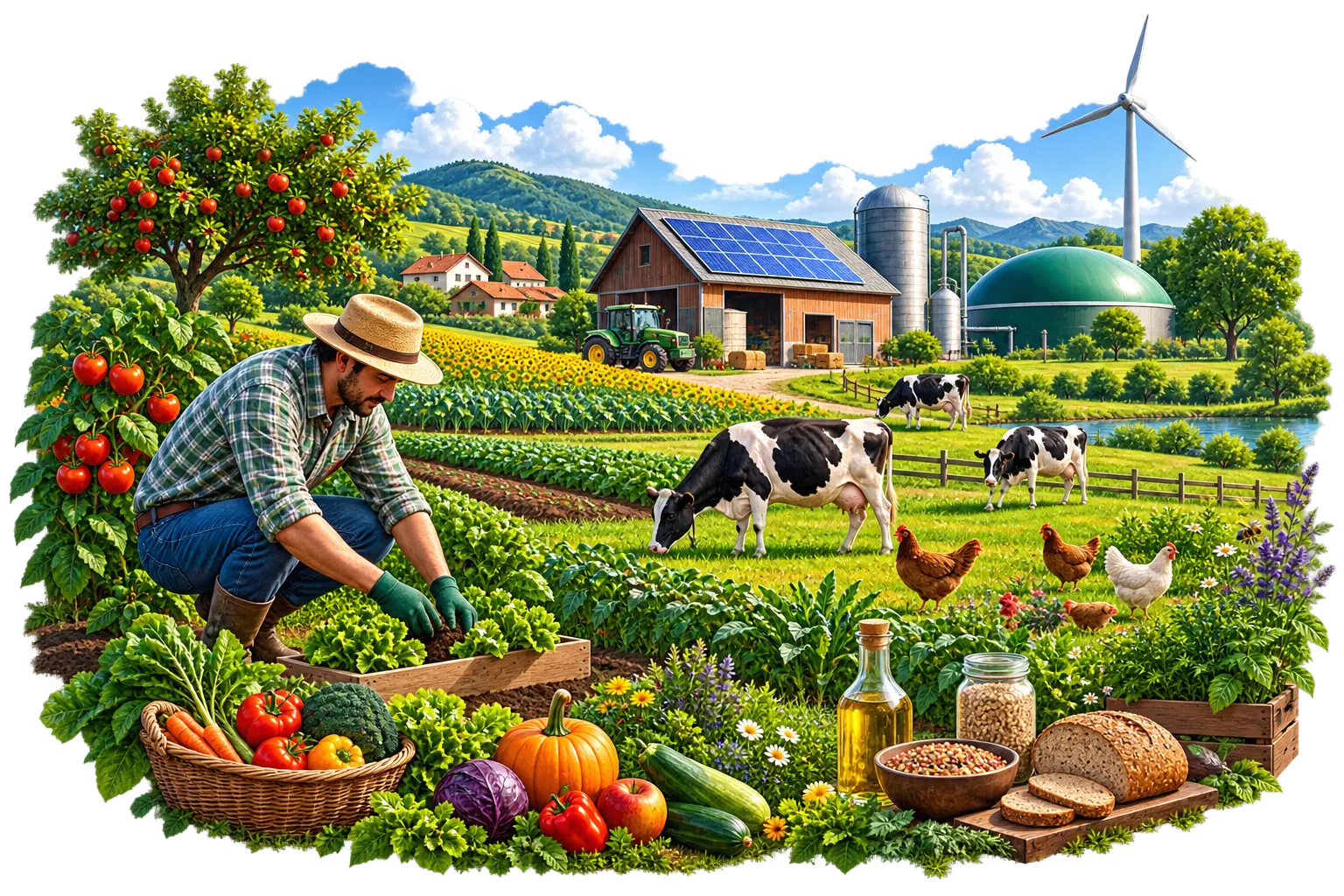
Food
The food system must guarantee enough healthy food for everyone, while protecting soil, water, biodiversity and the climate.
- Producing food while protecting soil, water and biodiversity
- Progressively transforming intensive livestock farming
- Stopping food waste
- Guaranteeing healthy, accessible food for everyone
- 01
Producing food while protecting soil, water and biodiversity
Agriculture depends on nature and, at the same time, can profoundly alter it. Reducing erosion and soil degradation, making better use of water and fertilizers, limiting pollution and favoring farming practices suited to different territories can make food production more resilient.
- Impact multiple
- Time medium
- Scale local → global
Includes
- precision agriculture
- crop rotation
- protecting soil fertility
- more efficient water use
- reducing excessive use of fertilizers and pesticides
- agricultural research
- recovery and valorisation of agricultural residues
- sustainable production of biogas and biomethane from residues
Agricultural residues and livestock effluent, too, can be valorised, where appropriate, to produce biogas or biomethane, recovering energy and reducing some of the impacts of waste management. This use must, however, fit within sustainable farming systems and must not become an incentive to produce more waste.
This is not about pitting organic against conventional farming: practices should be assessed on their overall results.
- 02
Progressively transforming intensive livestock farming
Intensive livestock farming can have significant impacts on the climate, on land and water use, on pollution and on animal welfare. A shift towards less intensive systems and a reduction in the excessive consumption of animal products, especially where it is high, can lessen these pressures.
- Impact multiple
- Time medium-long
- Scale national → global
The transformation must be gradual and accompanied by economic support and concrete alternatives for farmers, workers and the areas involved.
- 03
Stopping food waste
A significant share of the food produced is never consumed. Losses occur throughout the whole supply chain: production, storage, transport, distribution and household consumption. Reducing them means making better use of the land, water, energy, labor and money already spent producing that food.
- Impact multiple
- Time short
- Scale local → global
Includes
- better storage systems
- more efficient supply chains
- recovery of surpluses
- reducing commercial waste
- education against household food waste
- 04
Guaranteeing healthy, accessible food for everyone
The global food problem is not just about how much food we produce, but about who can access it and at what price. Effective food policies must promote healthy, sustainable diets without turning them into a privilege for those who can afford them.
- Impact social and environmental
- Time short-medium
- Scale local → national
Includes
- quality school meals
- support for vulnerable families
- food education
- accessibility of healthy food
- availability of plant-based alternatives
Producing more is not always the first answer. We can also waste less, distribute better and make more efficient use of what we already produce.
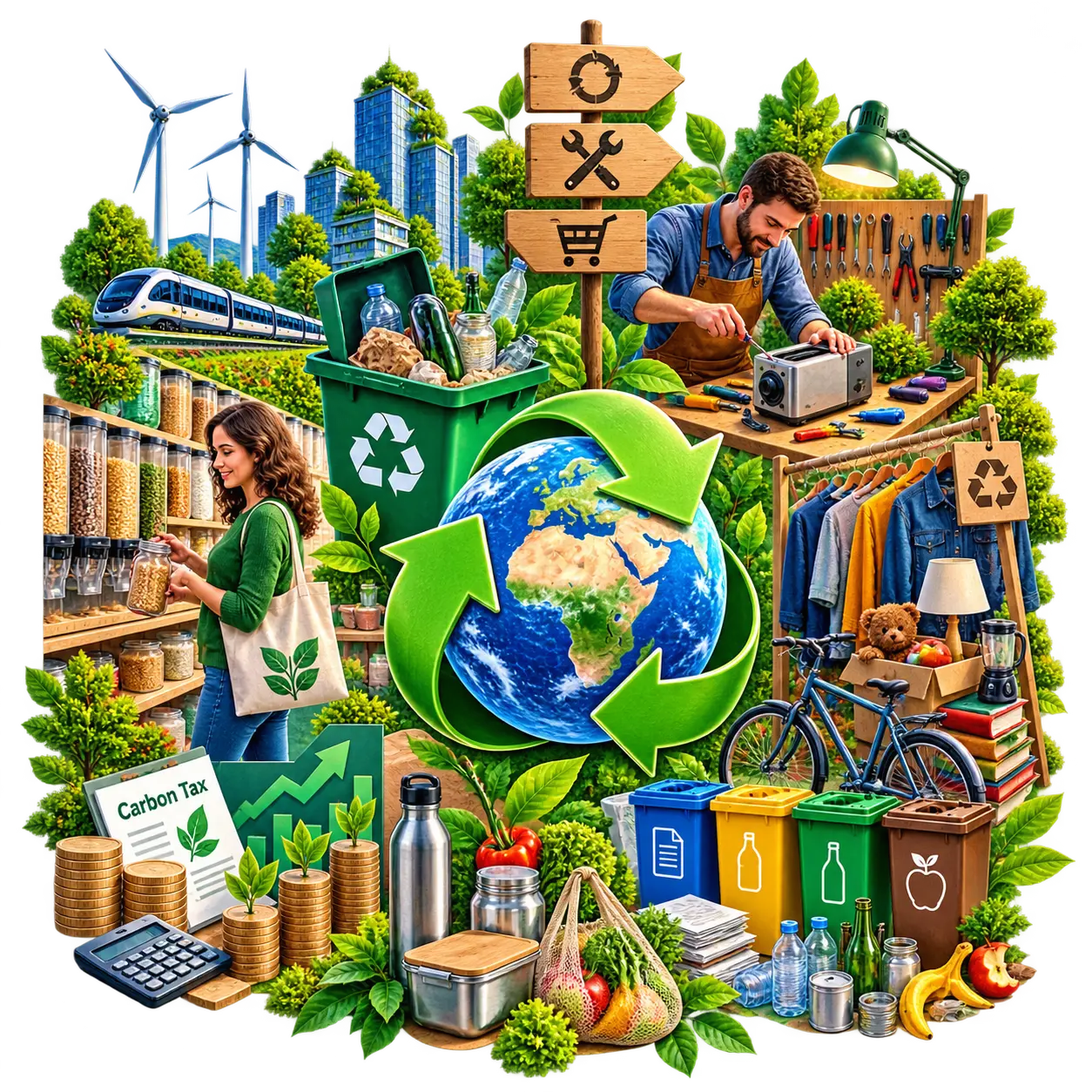
Economy, consumption and society
A sustainable economy must make better use of resources and fairly distribute the costs and benefits of the transformation.
- Consuming better, not simply consuming more
- Designing products that last
- Making those who cause the most harm pay more
- Reducing inequality in the transition
- 01
Consuming better, not simply consuming more
Wellbeing cannot depend indefinitely on ever-increasing consumption of raw materials, energy and products. Reducing waste and the highest-impact forms of consumption, especially non-essential ones, can lower pressure on the environment without necessarily reducing quality of life.
- Impact multiple
- Time medium
- Scale individual → global
A useful distinction
- necessary consumption
- superfluous consumption
- very high-impact luxury consumption
- 02
Designing products that last
Many products could be used for much longer if they were designed to last, to be repaired and to be upgraded. Favoring durability, repairability, availability of spare parts, reuse and producer responsibility can reduce waste and the consumption of new resources.
- Impact multiple
- Time medium
- Scale national → global
Includes
- right to repair
- countering planned obsolescence
- longer warranties
- availability of spare parts
- repairability standards
The most sustainable product is often the one we don't have to buy again.
- 03
Making those who cause the most harm pay more
The prices of many goods and activities do not fully reflect the environmental and social damage they cause. Fiscal tools and prices on emissions can help incorporate these costs and steer investment and behavior towards less harmful alternatives.
- Impact indirect but broad
- Time short-medium
- Scale national → global
Revenue can help fund
- compensation for households
- affordable public transport
- energy retrofitting of homes
- professional training
- conversion of activities
Environmental taxation is socially sustainable only if it protects those who have the least ability to change their behavior.
- 04
Reducing inequality in the transition
Great transformations become difficult to accept when their costs are distributed unfairly. Those who lose a job, see an essential expense rise, or live in an area dependent on a declining activity cannot simply be left behind.
- Impact social
- Time short-medium
- Scale national → global
A path of support
- Training
- Conversion
- Temporary support
- New jobs
- Social protection
The same principle applies between countries: those with fewer resources need support to be able to take part in the transition.
Population and quality of life
Population dynamics also affect, over the long term, the demand for food, water, energy, land and resources. Addressing this issue does not mean imposing choices on families, but creating the conditions that allow free, informed decisions: education, equality between women and men, access to family planning, health protection, and economic and social security.
Where population growth is high, these conditions can, over time, help stabilise population while also improving quality of life.
Change has a cost. But not changing also has a cost, often a much greater one.
Technology and security
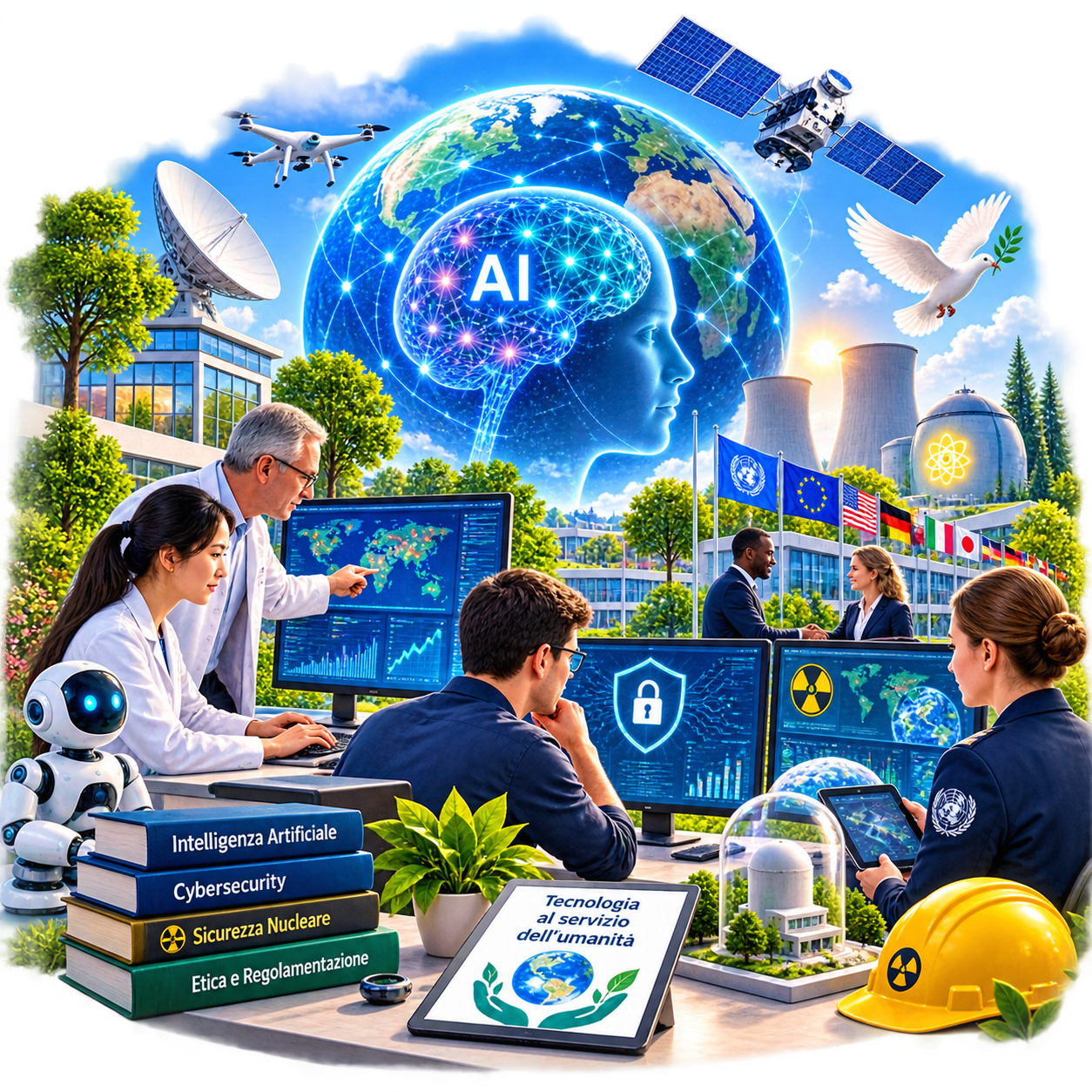
Technology can contribute enormously to solving global problems, but ever more powerful tools also require a greater capacity to understand and control their risks.
- Using technology to address global problems
- Governing the development of artificial intelligence
- Reducing nuclear risk
- Preventing progress from creating new global risks
- 01
Using technology to address global problems
Science and technology can enormously increase our capacity to understand and address complex problems. Artificial intelligence, new materials, biotechnology, satellites, forecasting systems and automation can contribute to scientific research, the energy transition, ecosystem protection, medicine and disaster prevention.
- Impact enabling
- Time short-long
- Scale global
Technology can accelerate solutions, but it does not replace the decisions needed to apply them.
- 02
Governing the development of artificial intelligence
Artificial intelligence can produce great benefits, but ever more capable systems can also create new risks: military use, manipulation of information, concentration of power, loss of control over critical systems, and consequences that are difficult to foresee today. The development of the most advanced AI must therefore go hand in hand with rules, independent safety assessments, oversight mechanisms for the most advanced systems, transparency and international cooperation.
- Impact systemic
- Time urgent
- Scale global
The greater a technology's capability, the greater must be our capacity to control it.
- 03
Reducing nuclear risk
Thousands of nuclear weapons continue to exist, and some can be used within very short timeframes. Human error, accident, escalation or a deliberate decision can produce consequences that go beyond the borders of any single state. Reducing the risk means progressively cutting arsenals, strengthening treaties, improving verification systems, reducing the chances of accidental use, and rebuilding channels of dialogue even between rival countries.
- Impact existential
- Time urgent → long
- Scale global
Long-term goal
- a world without nuclear weapons, achieved through a gradual, verifiable and shared process.
- 04
Preventing progress from creating new global risks
A technology can produce enormous benefits while simultaneously creating new risks. For this reason, safety should not be added only after a technology has already spread. Risk assessment, safety research, independent oversight and response capacity must accompany technological development from the very start.
- Impact preventive
- Time continuous
- Scale global
Includes
- advanced biotechnology
- autonomous systems
- critical infrastructure
- future high-impact technologies
- cybersecurity
In increasingly digitalised societies, protecting networks, essential services and critical infrastructure from cyberattacks is part of collective security.
The question is not whether we should stop progress, but how to ensure that progress remains at the service of humanity.
Global cooperation
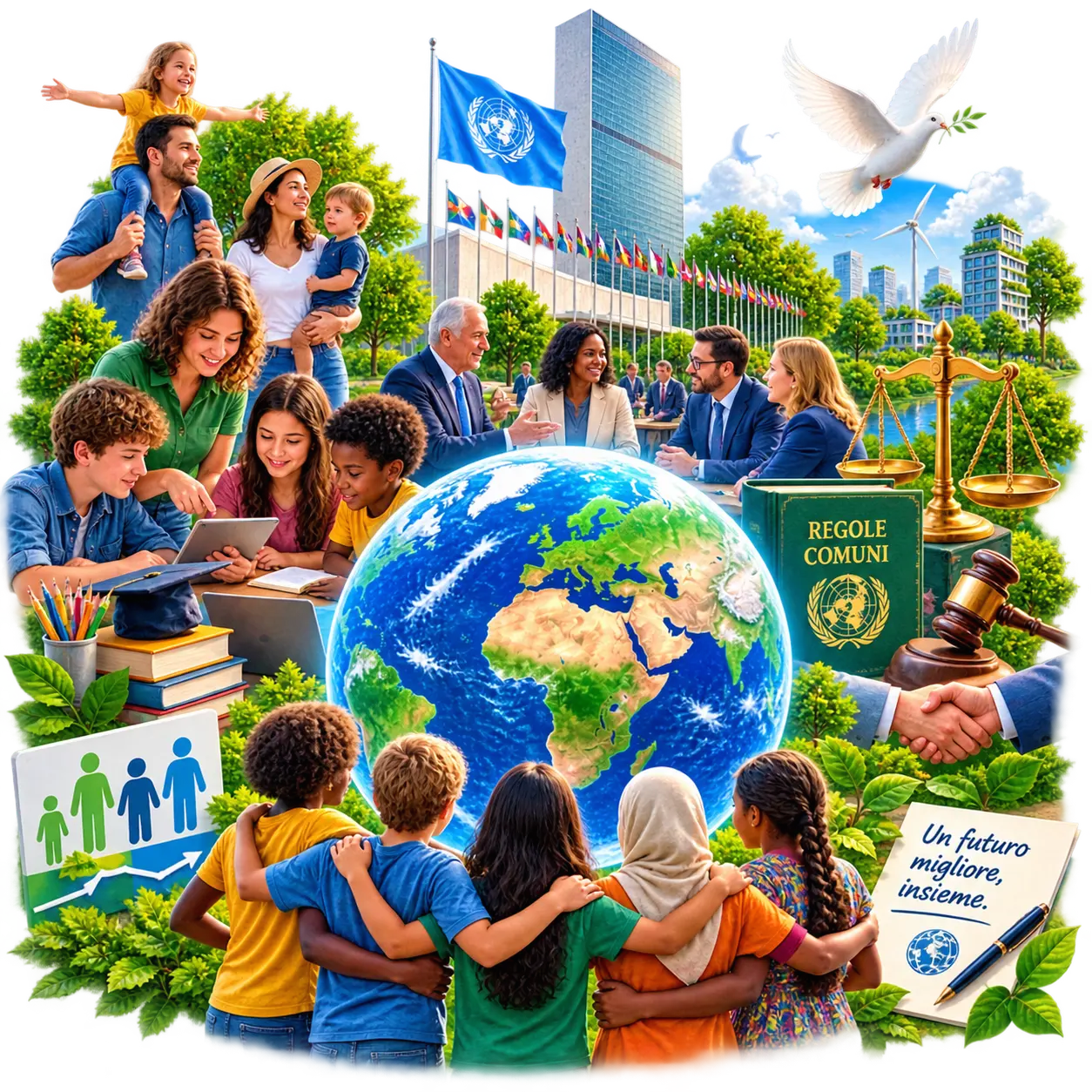
Global problems do not stop at borders. Our decision-making capacity, on the other hand, largely still does.
- Turning agreements into verifiable commitments
- Strengthening the institutions that address global problems
- Sharing responsibility and resources
- Giving the future a voice in today's decisions
- 01
Turning agreements into verifiable commitments
International agreements are essential, but they become ineffective when commitments are too vague, hard to verify, or can be ignored without consequences. Common goals must be measurable, verifiable and accompanied by independent checks and, where necessary, defined consequences in case of non-compliance.
- Impact enabling
- Time short-medium
- Scale global
The questions a commitment must be able to answer
- Who must do what?
- By when?
- Has it been done?
- With what results?
- What happens if it isn't met?
- 02
Strengthening the institutions that address global problems
Many international institutions were created in a world very different from today's. Some of today's challenges — from climate to pandemics, from nuclear security to artificial intelligence — require fast, coordinated decisions, high scientific expertise, independence and the capacity to act on problems that concern the whole of humanity. It is therefore necessary to strengthen the tools of international cooperation and consider new forms of governance for truly global issues.
- Impact systemic
- Time medium-long
- Scale global
- 03
Sharing responsibility and resources
All countries have an interest in addressing global problems, but they do not have the same resources and have not contributed to their origin in the same way. Effective cooperation must therefore distribute responsibilities and funding by taking into account economic capacity, social conditions and each country's contribution to the problems being addressed.
- Impact multiple
- Time medium
- Scale global
Includes
- international funds
- technology transfer
- adaptation
- prevention
- support for countries with fewer economic resources
International solidarity is not only a moral issue: in an interdependent world it is also a shared interest.
- 04
Giving the future a voice in today's decisions
Many political and economic decisions produce effects for decades, while those who will bear the greatest consequences — including younger generations and those not yet born — currently have limited or no chance to take part in decision-making. Institutions should therefore systematically assess the effects of their choices on future generations, beyond immediate advantages.
- Impact structural
- Time short → long
- Scale national → global
Includes
- intergenerational impact assessments
- independent bodies
- long-term indicators
- assessment of future consequences in major decisions
- Energy, climate and mobility
- Nature and resources
- Food
- Economy, consumption and society
- Technology and security
- Global cooperation
None of them really works alone.
Technologies may exist. Resources may be available. Solutions may be known. But without the ability to decide and act together, many of them will remain insufficient or arrive too late.
Combined effects
Benefits multiply
The most effective solutions do not produce a single result. A well-designed intervention can help address several problems at once.
Protecting and restoring forests
- Climate
- Biodiversity
- Water
- Soil
Improving and making public transport accessible
- Emissions
- Air quality
- Traffic
- Social equity
Making buildings more efficient
- Energy
- Emissions
- Household spending
- Comfort
Reducing food waste
- Soil
- Water
- Energy
- Costs
Jointly assessing the effects of different solutions makes it possible to choose those capable of producing the greatest overall benefits.
Fairness
The transition must also be fair
Change has a cost. But not changing also has a cost, often a much greater one. The question is not only how much a solution costs, but who bears that cost and who receives the benefits. Some transformations can cost jobs in certain sectors, temporarily raise certain expenses, or require major investment. That is why an effective transition must protect the most exposed people and support workers, families and communities towards new opportunities.
Where to find the resources
- reallocating harmful subsidies
- the "polluter pays" principle
- fair environmental taxation
- tackling tax evasion and avoidance
- public and private investment
- international financial cooperation
Where to use them
- professional retraining
- temporary income support
- aid for vulnerable families
- conversion of businesses
- energy efficiency of homes
- public transport
- support for lower-resource countries
A solution that protects the planet but leaves millions of people behind is unlikely to be accepted and sustained over time.
Two questions, not one
How much does inaction cost?
When we assess a solution, we tend to ask how much it will cost to implement. But there is a second, equally important question: how much will it cost us not to implement it?
Cost of action
Investment, reorganization of production systems, training, support for those affected: costs that can largely be planned and spread over time.
Cost of inaction
Unchosen costs, hard to predict and often concentrated on the most exposed:
- fires
- floods
- droughts
- crop losses
- damage to infrastructure
- health crises
- conflicts
This page does not propose economic figures: the comparison must be built on verified data, case by case.
The time factor
Acting sooner means having more options
Not all solutions produce immediate results. A forest takes decades to mature, an energy grid takes years to be transformed, an international agreement takes time to be negotiated and applied. That is why some actions must begin before they become urgent.
Now
By 2030
2030–2040
2040–2050
Beyond 2050
Individual solutions are not automatically tied to precise dates: timing and priorities must be defined with greater rigour on a case-by-case basis.
From solutions to a plan of action
Knowing what to do is not enough
Priorities, responsibilities and timelines must be set. Solutions must be turned into concrete programs, distinguishing what requires immediate action from what can be achieved progressively, and clarifying who must act: international institutions, states, businesses, communities and citizens.
- World
- States and administrations
- Businesses and society
Time horizons
- Now
- 2030
- 2040
- 2050
- Beyond
LAST CHANCE
From solutions to decisions
What choices would you make if the future depended on you? In LAST CHANCE you can put your decisions to the test and discover their consequences. The game is available to download free on Google Play.
The solutions exist. But who can put them into practice?
Much of the knowledge, technology and strategy needed is already available. The greatest difficulty is coordinating decisions and actions when problems cross borders, governments and generations.
If the problems are global, how can we address them together?